
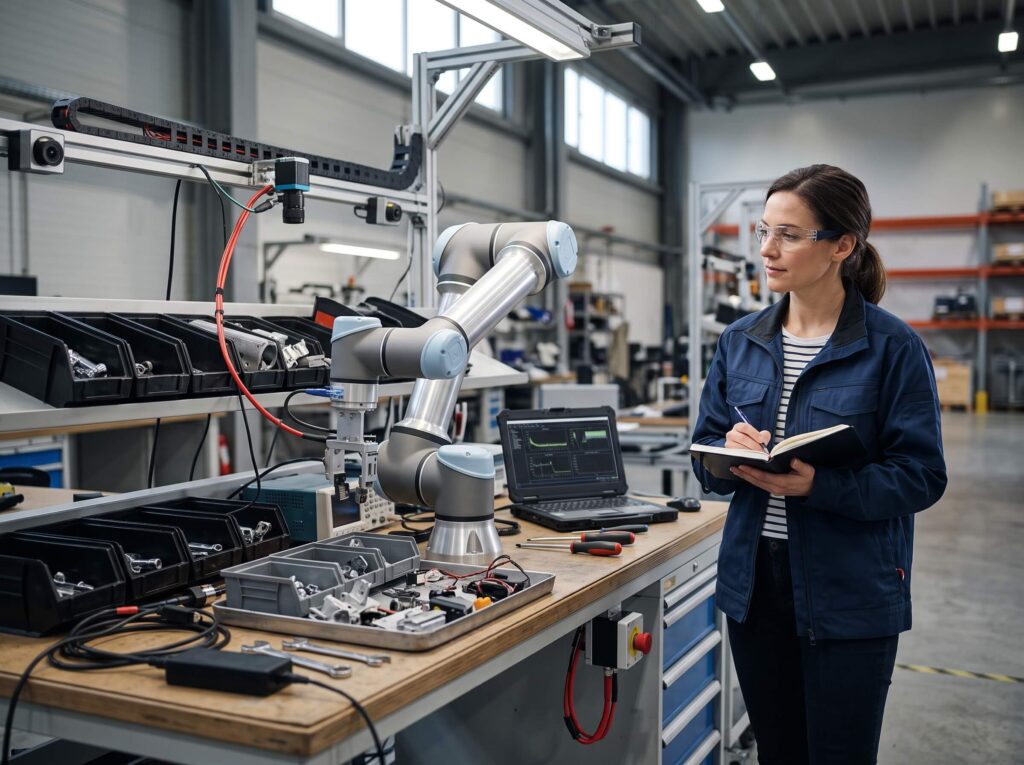
AI learned the internet. Now it has to learn the world.
Artificial intelligence has made remarkable progress by learning from the digital world. The internet has provided AI systems with an enormous supply of text, images, video, code, and other forms of digital information. From language models and generative AI to increasingly capable software agents, much of the recent evolution of AI has been powered by this abundance of digital data.
But the physical world presents a fundamentally different challenge.
It is one thing for an AI system to recognize an object in an image or describe how a task should be performed. It is another for an intelligent machine to physically carry out that task while responding to changing environments, unexpected situations, and the constraints of the real world.
Picking up a cup, opening a drawer, turning a handle, moving an object, or interacting safely with people requires more than recognition. It requires perception, movement, coordination, control, and experience.
This is where Physical AI comes into the picture.
Physical AI broadly refers to intelligent systems that can perceive, reason about, and act within physical environments. Robotics is one of its most visible applications, but the challenge extends beyond the robot itself. For intelligent machines to become more capable in the physical world, they need something that digital AI has benefited from for years: meaningful experience at scale.
At Callindo, we see this transition as more than another technology trend. It represents an opportunity to rethink how people, technology, and AI can work together to solve increasingly complex real-world problems.
That is why we are excited to announce our partnership with WorldEngine AI.
From Digital Intelligence to Physical Intelligence
The development of modern AI has been closely connected to the availability of digital data.
The internet created a vast learning environment. Human knowledge, communication, images, software, and countless other forms of digital information could be collected and transformed into material that AI systems could learn from.
Physical intelligence faces a different problem.
Much of human physical knowledge is implicit. We know how to reach for a glass, grasp a handle, pick up an object, adjust our movement when something slips, or change our approach when an expected action does not work.
We perform these actions continuously, often without consciously thinking about the complexity involved.
For machines, however, these interactions contain valuable information.
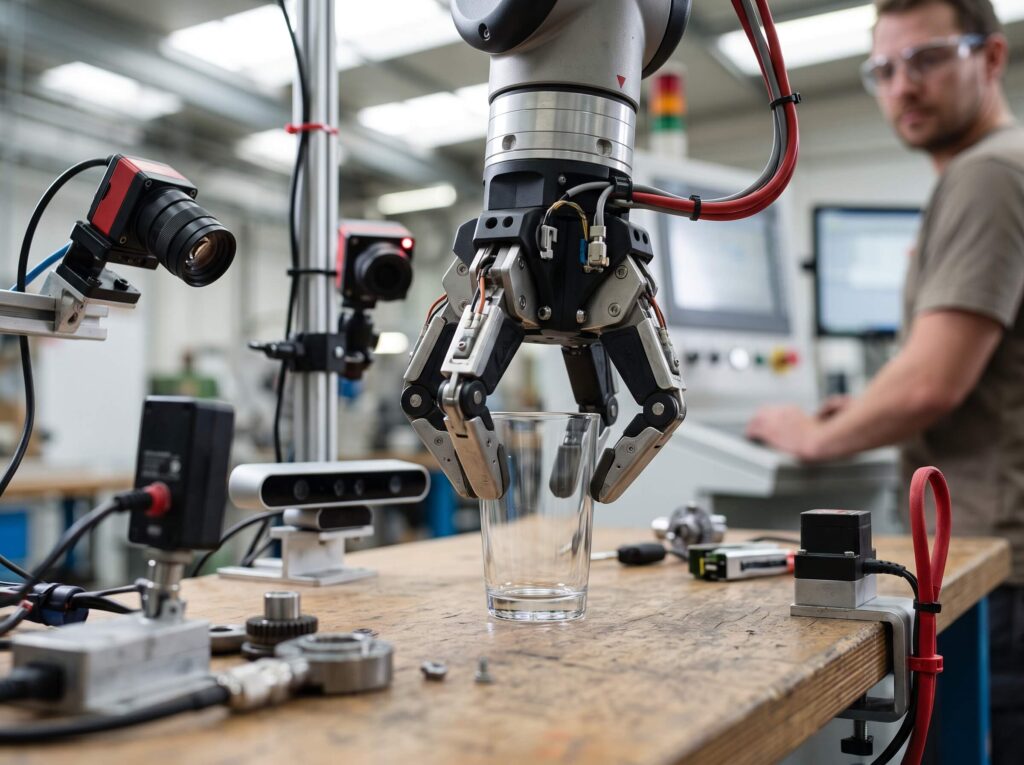
The position of an object, the movement of a hand, the force required to grasp something, the relationship between multiple objects, and the response to an unexpected event can all contribute to the physical experience an AI system needs to learn from.
WorldEngine AI is focused on this challenge.
Its stated mission is to achieve Physical AGI, beginning with what it identifies as a key bottleneck: physical experience. The company describes its approach as capturing physical experience at scale, structuring it into useful data, and training models that can learn from it.
The idea changes the way we can think about robotics.
The question is not simply how to build a capable robot.
It is also how to create the systems, data, and learning processes that allow physical intelligence to continually improve.
Building the Infrastructure Behind Physical AI
This is one of the reasons WorldEngine AI is particularly interesting.
Rather than positioning the robot as a standalone product, WorldEngine describes its work as building a physical AI infrastructure layer connecting data, models, evaluation, and deployment.
At the center of this approach is a continuous learning cycle.
Physical experience is captured and structured into data. Models learn from that data. Their performance is evaluated in real-world environments. That evaluation reveals where the system still struggles, while failures and new experiences provide information that can feed the next stage of learning.
In simplified terms:
Capture → Structure → Train → Evaluate → Deploy → Learn again
This creates a different perspective on the future of robotics.
A capable physical AI system depends not only on hardware, but also on the infrastructure surrounding that hardware: the data it learns from, the models that process that data, the methods used to evaluate performance, and the deployment processes that connect intelligence back to the real world.
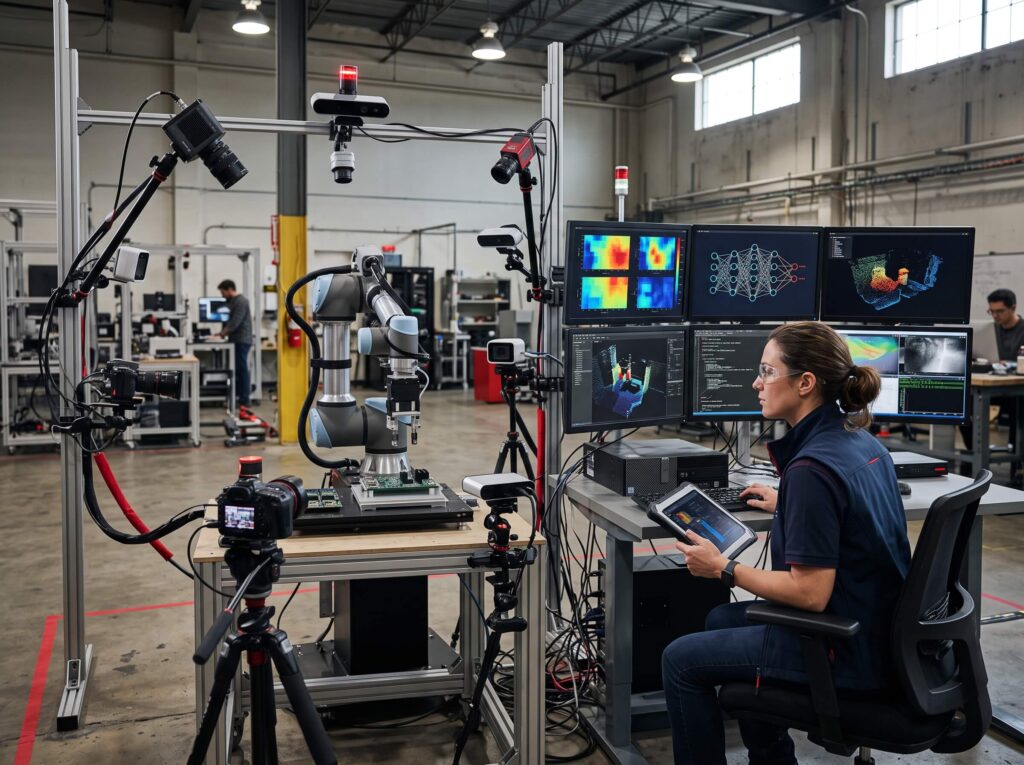
WorldEngine’s publicly presented work reflects this emphasis on physical experience and data. Its WEB-1K project, for example, presents bimanual manipulation demonstrations across 90 real-world tasks, with more than 50,000 recorded episodes and hundreds of millions of frames.
The significance is not simply the size of a dataset.
It is the recognition that everyday physical interaction can become a source of learning for machines.
Physical AI needs experience, and experience needs infrastructure.
Why the Human Element Still Matters
As AI and robotics become more capable, an important question naturally follows:
What happens to the role of people?
At Callindo, we do not see increased automation as automatically meaning a smaller role for humans.
Technology can improve speed, consistency, scalability, and access to information. AI can help analyze data, support decisions, and automate parts of increasingly complex workflows. Robotics can extend intelligent systems into physical environments.
But real-world operations are rarely perfectly predictable.
People understand context. They recognize exceptions. They make judgments when situations fall outside predefined scenarios. They help establish quality, manage edge cases, and connect technology with the practical realities of an operation.
That is why human-in-the-loop capabilities remain important as automation develops.
For Callindo, this is closely connected to what we already do.
Our capabilities span people, operational execution, data handling, quality assurance, technology-supported processes, and scalable workforce infrastructure. These capabilities become particularly relevant when technology moves beyond controlled digital workflows and into complex environments where human context and operational discipline still matter.
Physical AI adds a new dimension to this relationship.
Why Callindo and WorldEngine AI Are Complementary
This is where our partnership with WorldEngine AI becomes meaningful.
The two companies bring different capabilities to a shared and emerging area of opportunity.
WorldEngine AI focuses on Physical AI, physical experience, robotics, data, model training, evaluation, and the infrastructure needed to help intelligent systems learn from the physical world.
Callindo brings people, operational execution, data handling, quality processes, and human-in-the-loop capabilities.
These are complementary capabilities rather than identical ones.
For Callindo, this partnership is not about becoming a robotics manufacturer. It is about extending our existing approach to people and technology into an emerging ecosystem where AI is increasingly interacting with the physical world.
As intelligent machines move beyond controlled demonstrations and into more varied real-world environments, the surrounding operational layer becomes increasingly important.
Experience must be captured.
Data must be structured.
Processes must be executed consistently.
Performance must be evaluated.
Exceptions must be understood.
And the resulting information must be fed back into the learning cycle.
These are areas where technology and human operational capabilities can work alongside one another.
People + Technology + AI
For Callindo, our broader direction can be expressed simply:
People + Technology + AI.
People bring context, judgment, adaptability, and operational experience.
Technology provides the infrastructure, connectivity, and scalability required to support increasingly sophisticated operations.
AI introduces new capabilities for intelligence, automation, analysis, and decision support.
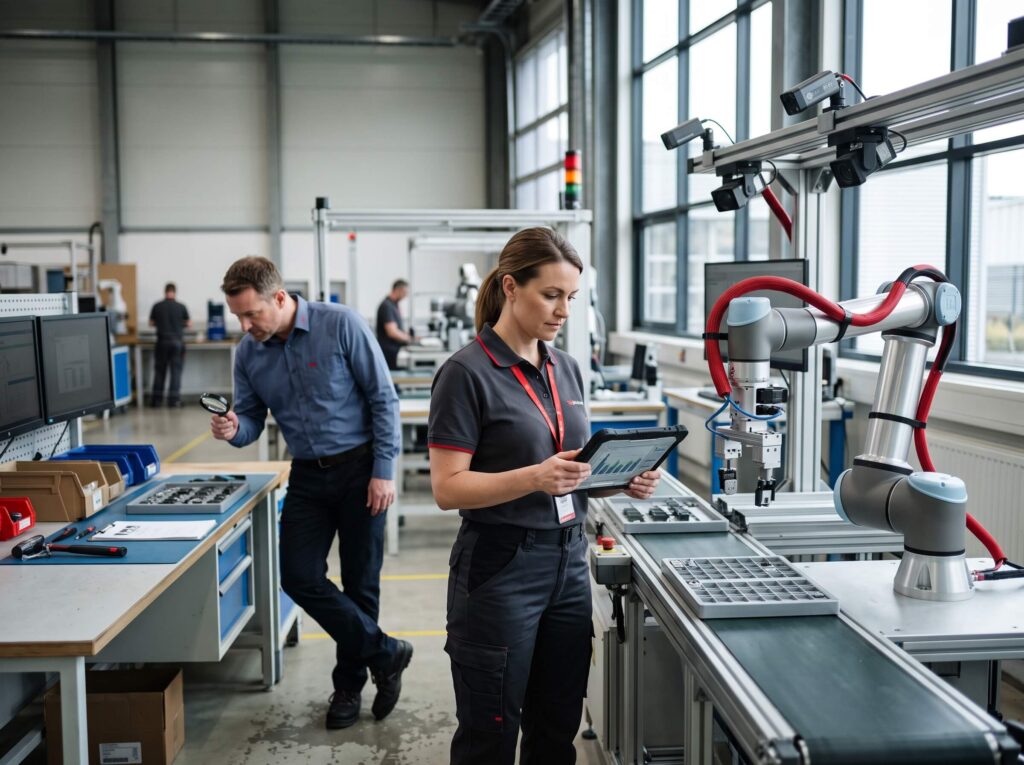
Physical AI extends that combination beyond screens and digital workflows and into the physical environment.
This creates new possibilities for collaboration.
How can human expertise help intelligent systems learn? How can operational processes support the deployment and evaluation of intelligent machines? How can data generated through real-world interaction become useful learning material? And how can people and intelligent machines work together more effectively?
These are still evolving questions.
What is becoming clearer, however, is that the conversation around AI is expanding.
AI is no longer only about what happens inside software. Increasingly, it is also about how intelligent systems perceive and act in the world around us.
Looking Ahead
Physical AI remains an emerging field, and many of its most difficult challenges are still open.
Machines need more physical experience. Models need better data. Systems need robust evaluation. Intelligent agents need to become more adaptable when faced with the complexity, variability, and unpredictability of real-world environments.
WorldEngine’s approach starts from the premise that physical intelligence requires a learning substrate of its own. Its focus on physical experience, data, models, evaluation, and deployment reflects that broader challenge.
For Callindo, our partnership with WorldEngine AI is an opportunity to participate in this evolution while building on what we already know best: combining people, technology, and operational execution to solve real-world problems.
The future does not have to be framed as people versus machines.
Nor does it have to be defined simply by AI replacing human work.
A more useful question is how effectively people, AI, and intelligent machines can work together.
As AI moves from understanding the digital world toward interacting with the physical one, the role of human experience, operational capability, and technology infrastructure will continue to evolve alongside it.
People + Technology + AI → now extending into the physical world.
That is the future we are excited to explore together with WorldEngine AI.